CBD with Curcumin (Turmeric), Omega-3 and Vitamins
What turmeric, curcumin, piperine, omega-3, vitamins and minerals are, what EU law allows a label to say about each, and the safety questions to check before combining them with CBD. Research on CBD and curcumin together has so far been published as reviews and laboratory work.
By Helen CrossUpdated 12 min read
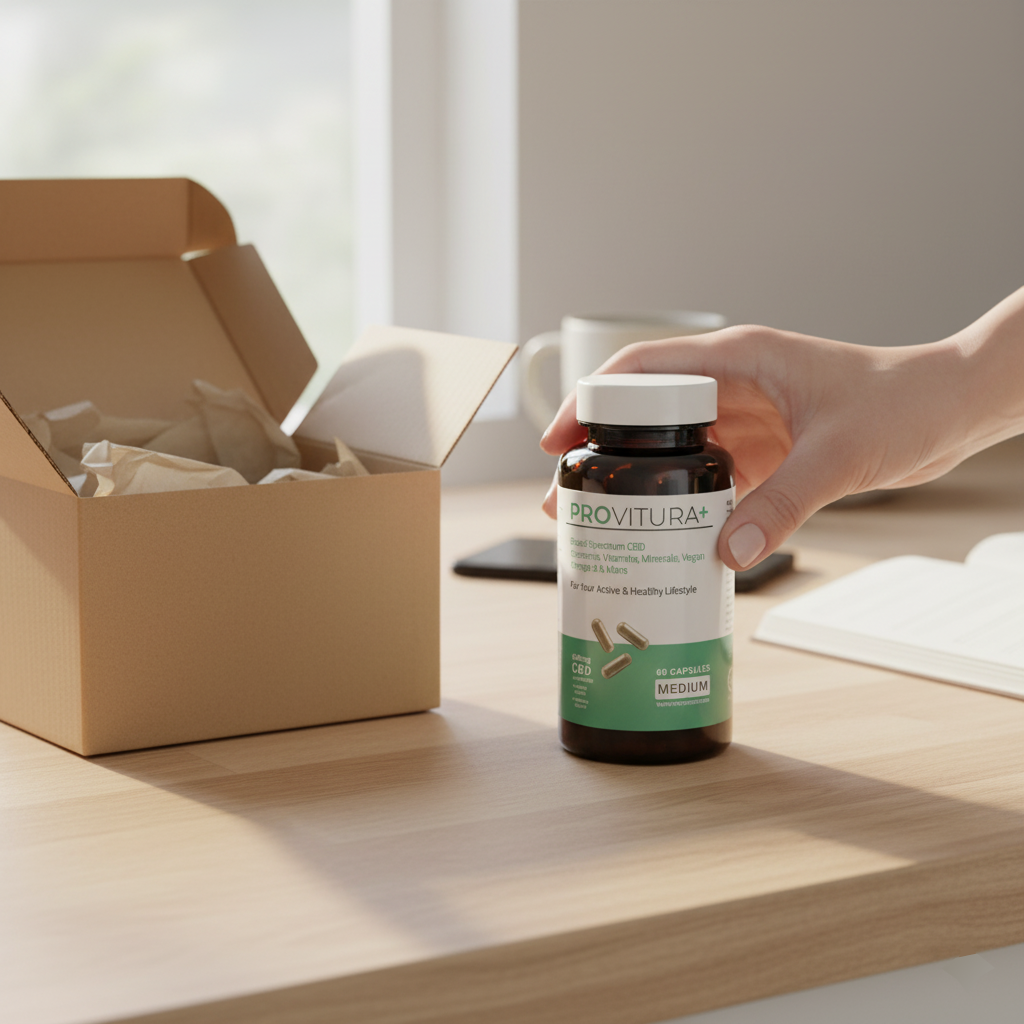
CBD, curcumin, omega-3, vitamins and minerals can sit in the same capsule, and each one comes with its own research, safety notes and legal status in the EU. Vitamins, minerals and the omega-3 fats DHA and EPA have authorised health claims with strict conditions. Turmeric, curcumin and CBD have none so far. Work on CBD and curcumin together has been published as reviews and laboratory studies.
This guide explains what each ingredient is, what a label may say about it, and what to check if you take medication. For background on CBD itself, see what CBD is and how it is made.
Key points
- Curcumin is one compound in turmeric root. Pure turmeric powder tested in a 2006 study averaged 3.14 % curcumin by weight (opens in a new tab).
- A PubMed search on 19 October 2026 for cannabidiol together with curcumin or turmeric returned 47 records (opens in a new tab), 24 of them indexed as reviews.
- Turmeric and curcumin claims are among the EU's botanical claims "on hold". In April 2025 the EU Court of Justice ruled that on-hold botanical claims about psychological or behavioural functions (opens in a new tab), and general well-being references not paired with an authorised claim, may not be used unless the Article 28(6) transitional rules allow them.
- The European Commission treats CBD as a novel food, and EFSA is assessing each CBD novel food application (opens in a new tab). As of October 2026, none has been authorised.
- France's food safety agency ANSES advises people taking anticoagulants, cancer drugs or immunosuppressants to seek medical advice before taking turmeric supplements (opens in a new tab).
What is the difference between turmeric and curcumin?
Turmeric (Curcuma longa) is a plant in the ginger family, and the spice comes from its underground stem. Curcumin is a major component of turmeric and gives the spice its yellow colour. The US National Center for Complementary and Integrative Health (NCCIH) notes that the activity of turmeric is commonly attributed to curcuminoids (opens in a new tab), a group of related compounds that includes curcumin.
The amounts are very different. A 2006 analysis of 28 spice products found that pure turmeric powder averaged 3.14 % curcumin by weight (opens in a new tab), and most curry powders contained far less. So a gram of turmeric powder holds roughly 30 mg of curcumin, while a supplement may list curcumin as a purified extract in milligrams.
That is why a label that says "turmeric" and a label that says "curcumin" are not interchangeable. Check which one is listed and in what amount.
Curcumin is also an authorised food colour in the EU, E 100. In 2010, EFSA confirmed an acceptable daily intake of 3 mg per kg of body weight a day (opens in a new tab) for curcumin as a food additive. EFSA noted that curcumin from a normal diet amounts to less than 7 % of that figure.
Why is black pepper (piperine) added to curcumin?
Curcumin on its own is poorly absorbed. In a 1998 study, healthy volunteers who took 2 g of curcumin alone had blood levels that were undetectable or very low (opens in a new tab). When the same dose was taken with 20 mg of piperine, a compound from black pepper, the extent of absorption was 2,000 % higher. The authors linked this to piperine slowing the breakdown of curcumin in the liver and gut wall.
The higher absorption has a safety side. NCCIH states that highly bioavailable formulations of curcumin may harm the liver (opens in a new tab), and that liver damage has been reported in some people using them.
Piperine can also change how some medicines are handled. In laboratory tests with human cells and liver tissue, piperine inhibited P-glycoprotein and CYP3A4 (opens in a new tab), two systems that clear many oral drugs. The authors concluded that dietary piperine could affect blood levels of those drugs in people.
What research exists on CBD and curcumin together?
A PubMed search on 19 October 2026 for cannabidiol together with curcumin or turmeric returned 47 records (opens in a new tab), and 24 of them were indexed as reviews.
A 2022 review, for example, looked at curcumin, resveratrol and CBD side by side as starting points for designing new drug molecules (opens in a new tab).
Clinical trials of CBD and curcumin taken together have not been published yet.
Turmeric vs CBD: how do they differ?
Turmeric and CBD come from different plants and sit in different legal categories.
Source
- Turmeric and curcumin
- Root of Curcuma longa, a ginger-family plant
Status in EU food
- Turmeric and curcumin
- Traditional spice; curcumin is also food colour E 100
- CBD (cannabidiol)
- Novel food; no CBD novel food authorised as of October 2026
Authorised EU health claims
- Turmeric and curcumin
- None; claims on hold
- CBD (cannabidiol)
- None
How the rules for CBD differ between countries is covered in our guide to CBD law in Europe.
Omega-3 in a CBD capsule: EPA, DHA and algae oil
"Omega-3" covers several fats. The three most studied are ALA, found in plant oils such as flaxseed, and EPA and DHA, found in fish and seafood. The body converts some ALA into EPA and DHA, but the US Office of Dietary Supplements (ODS) puts that conversion at less than 15 % (opens in a new tab).
Fish do not make EPA and DHA themselves. According to ODS, these fats are originally made by microalgae (opens in a new tab) and build up in fish through the food chain. Algal oil supplements are the vegetarian source and usually provide around 100 to 300 mg of DHA, sometimes with EPA.
The total oil weight on a label is not the same as the EPA and DHA content. Look for the amount of each in milligrams per daily serving.
For safety, EFSA concluded in 2012 that supplemental intakes of EPA and DHA combined up to 5 g a day do not raise safety concerns for adults (opens in a new tab). The scientific opinion behind that statement gives dietary recommendations for European adults of 250 to 500 mg of EPA and DHA a day (opens in a new tab). ODS notes that high doses of omega-3 may cause bleeding problems when taken with warfarin or other anticoagulants (opens in a new tab).
Omega-3 is one of the ingredients in this group with authorised EU claims. Regulation (EU) No 432/2012 (opens in a new tab) authorises some DHA and EPA claims, each with its own conditions of use. For example, some DHA claims require at least 40 mg DHA per 100 g and per 100 kcal and a statement that the effect is obtained with a daily intake of 250 mg DHA. Whether a claim can be used therefore depends on the DHA and EPA content stated for the product.
Vitamins and minerals: what a label may say
Vitamins and minerals are the part of a multi-ingredient capsule with the most authorised claims. Regulation (EU) No 432/2012 (opens in a new tab) lists the approved wording, and each claim for a vitamin or mineral may only be used if the food is at least a "source of" that nutrient (opens in a new tab), meaning it contains a "significant amount" as defined in EU law. The claim belongs to the nutrient, not to the product or to the other ingredients in it.
Two practical points follow:
- Check the amount and the %NRV. EU rules require food supplements to state each vitamin and mineral per daily portion and as a percentage of the reference value (opens in a new tab). Those two figures show how much of each nutrient a daily serving provides.
- Add up what you already take. If you also take a multivitamin or a single vitamin, totals can add up. EFSA publishes tolerable upper intake levels (opens in a new tab) for adults, for example 25 mg a day for zinc, 12 mg for vitamin B6, 255 µg for selenium and 250 mg for magnesium from supplements (version of August 2025).
Vitamin D is covered in detail in our article on taking CBD and vitamin D together, so it is not repeated here.
Claim status at a glance
CBD
- Authorised EU health claim?
- No
- Notes
- Novel food; no authorisation as of October 2026
Turmeric and curcumin
- Authorised EU health claim?
- No
- Notes
- Botanical claims on hold (opens in a new tab)
Piperine
- Authorised EU health claim?
- No
- Notes
- Botanical; no authorised claim
DHA, EPA
- Authorised EU health claim?
- Yes, with conditions
- Notes
- Minimum content and daily intake statement, which vary by claim
Vitamins and minerals
- Authorised EU health claim?
- Yes, with conditions
- Notes
- Product must be at least a "source of" each nutrient
On 30 April 2025 (opens in a new tab) the EU Court of Justice ruled on two kinds of wording for botanicals whose assessment is still pending: claims about psychological or behavioural functions, and general references to overall well-being that are not paired with an authorised claim. Neither may be used unless the transitional rules in Article 28(6) of Regulation 1924/2006 allow it.
Separately, no health claim about joints or inflammation is authorised for curcumin (opens in a new tab), so a label may not make one.
Is it safe to take CBD and turmeric together?
The safety information below comes from each ingredient on its own. Three groups of questions matter most.
Medication. EFSA concluded that CBD safety cannot be established (opens in a new tab) for people taking medication, and our guide to who should avoid CBD lists the other groups. ANSES warns that curcumin may interact with anticoagulants, cancer drugs and immunosuppressants (opens in a new tab), and piperine inhibits CYP3A4 in laboratory tests. Our guide to medicines that need caution with CBD covers the CBD side in more detail.
The liver. Both ingredients have liver findings. ANSES received 15 reports of hepatitis (opens in a new tab) possibly linked to turmeric or curcumin supplements in France, and Italy recorded around 20 cases. For CBD, EFSA lists possible effects on the liver (opens in a new tab) among its open data gaps. The findings for CBD are set out in our article on CBD side effects and liver risks.
Bile ducts and bleeding. ANSES advises people with bile duct disease not to take turmeric supplements (opens in a new tab), because turmeric stimulates bile secretion. High doses of omega-3 may cause bleeding problems with anticoagulants (opens in a new tab), and ANSES advises people taking anticoagulants to seek medical advice before taking turmeric supplements (opens in a new tab).
What should you not mix with turmeric supplements?
Based on the ANSES advice above, the clearest cases are anticoagulants, cancer drugs and immunosuppressants without medical advice, and any use by people with bile duct disease. If you take any medicine, ask your doctor or pharmacist before adding a supplement that contains turmeric, piperine or CBD.
What supplements should you not take with CBD?
The main concerns are products that act on the same drug-clearing enzymes or on bleeding, and doubled-up nutrients. Piperine inhibits CYP3A4 in laboratory tests (opens in a new tab), an enzyme system that clears many drugs. High-dose omega-3 may cause bleeding problems with anticoagulants (opens in a new tab). And a second product with the same vitamins or minerals can push totals past EFSA's tolerable upper intake levels (opens in a new tab). For other combinations, see combining CBD with vitamins and other supplements.
How to read a CBD and curcumin capsule label
- Find the daily serving. Amounts are often given per two capsules, not per capsule.
- Check whether the label lists turmeric or curcumin, and the amount in milligrams.
- Look for piperine or another absorption enhancer. NCCIH links these formulations to liver reports.
- Check EPA and DHA in milligrams, not only the total oil weight.
- Read the claims. Wording about vitamins, minerals, DHA or EPA should match Regulation 432/2012. Claims about turmeric, curcumin or CBD are not authorised.
- Look for a batch lab report that confirms the CBD and THC content.
FAQ
Is curcumin the same as the food colour E 100?
Yes. Curcumin is authorised as a food colour under the code E 100, and EFSA re-evaluated it as a food additive in 2010. That assessment confirmed the acceptable daily intake of 3 mg per kg of body weight (opens in a new tab).
Is algae omega-3 the same as fish oil omega-3?
Both supply EPA and DHA, which microalgae make first. ODS cites a small study in which DHA from algal oil was as bioavailable as DHA from cooked salmon (opens in a new tab). Algal oil supplements usually contain DHA and sometimes EPA, in varying amounts.
Sources
- Tayyem RF et al. (2006). Curcumin content of turmeric and curry powders (opens in a new tab). Nutrition and Cancer.
- Shoba G et al. (1998). Influence of piperine on the pharmacokinetics of curcumin in animals and human volunteers (opens in a new tab). Planta Medica.
- Bhardwaj RK et al. (2002). Piperine, a major constituent of black pepper, inhibits human P-glycoprotein and CYP3A4 (opens in a new tab). Journal of Pharmacology and Experimental Therapeutics.
- Viegas FPD et al. (2022). Curcumin, resveratrol and cannabidiol as natural key prototypes in drug design for neuroprotective agents (opens in a new tab). Current Neuropharmacology.
- NCCIH. Turmeric: usefulness and safety (opens in a new tab).
- ANSES (2022). Adverse effects associated with the consumption of food supplements containing turmeric (opens in a new tab) and the revised opinion on turmeric food supplements (opens in a new tab) (in French).
- EFSA ANS Panel (2010). Scientific opinion on the re-evaluation of curcumin (E 100) as a food additive (opens in a new tab).
- EFSA NDA Panel (2022). Statement on the safety of cannabidiol as a novel food (opens in a new tab), plain-language summary.
- EFSA NDA Panel (2026). Provisional safe level for cannabidiol as a novel food (opens in a new tab).
- EFSA (2012). EFSA assesses safety of long-chain omega-3 fatty acids (opens in a new tab).
- EFSA NDA Panel (2012). Scientific opinion on the tolerable upper intake level of EPA, DHA and DPA (opens in a new tab).
- NIH Office of Dietary Supplements. Omega-3 fatty acids, health professional fact sheet (opens in a new tab) and consumer fact sheet (opens in a new tab).
- EFSA (2025). Overview on tolerable upper intake levels, version 11 (opens in a new tab).
- Commission Regulation (EU) No 432/2012 (opens in a new tab) and consolidated text with conditions of use (opens in a new tab).
- Regulation (EC) No 1924/2006 (opens in a new tab) and European Commission, nutrition claims (opens in a new tab) and EU register of health claims (opens in a new tab).
- Directive 2002/46/EC on food supplements (opens in a new tab).
- Court of Justice of the EU (2025). Case C-386/23, Novel Nutriology (opens in a new tab).