CBD and Joint Pain: What Arthritis Research Shows
Researchers have tested CBD creams and oral CBD in people with hand, thumb and knee arthritis. Here is what each study did, what it found, and the medicine interactions to know about.
By Helen CrossUpdated 10 min read
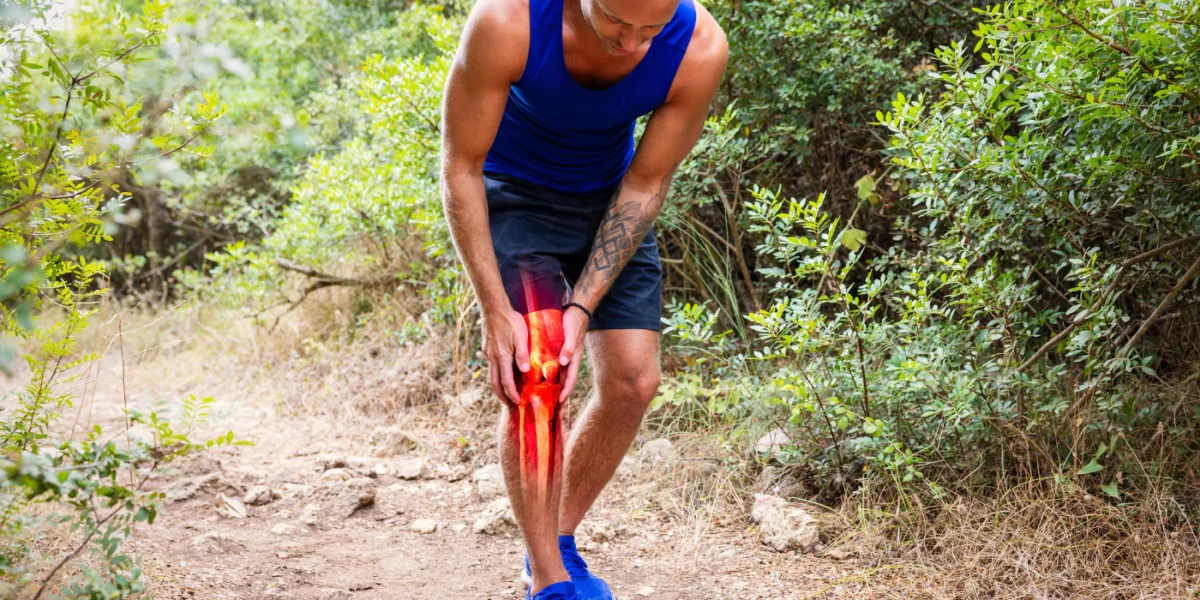
Researchers have tested CBD in people with hand, thumb and knee arthritis, both as a cream and taken by mouth. In a 2022 University of Virginia trial (opens in a new tab), 18 people with thumb arthritis reported lower pain and disability scores during two weeks on a CBD cream than during two weeks on a plain cream. Below is what each study did, what it found, and the safety questions that matter if you already take medicines for your joints.
Key points
- In a small crossover trial, 18 people with thumb arthritis (2022) (opens in a new tab) reported lower pain scores while using a CBD cream than while using the comparison cream.
- Three placebo-controlled trials of oral CBD in hand or knee osteoarthritis and psoriatic arthritis (Denmark, 2022 (opens in a new tab); Austria, 2023 (opens in a new tab); Brazil, 2025 (opens in a new tab)) measured similar changes in pain in the CBD and placebo groups.
- The Arthritis Foundation (opens in a new tab) lists ibuprofen, naproxen, paracetamol, celecoxib, prednisone and warfarin among the medicines that could interact with CBD.
Joint pain is not one condition
The phrase "joint pain" covers very different problems. The NHS (opens in a new tab) lists sprains and strains, osteoarthritis, rheumatoid arthritis, bursitis, gout and joint infection as possible causes, each with its own pattern of symptoms. Robert Shmerling, MD, of Harvard Health Publishing notes (opens in a new tab) that there are more than 100 types of arthritis, and that for conditions such as rheumatoid arthritis, prescription medicines are highly recommended because they help prevent permanent joint damage.
So read each study for the condition it tested. A trial in people with knee osteoarthritis tells you about knee osteoarthritis, not about rheumatoid arthritis, gout or a sports injury. For training, see our article on CBD, sport rules and training research. The Arthritis Foundation (opens in a new tab) (guidance updated July 2024) states that CBD is not a substitute for disease-modifying treatment for inflammatory arthritis.
If you're reading about inflammation as a research topic rather than about joints, our CBD and inflammation research overview covers what lab and human studies measured.
What trials of CBD and joint pain found
Three randomised, double-blind trials have compared oral CBD with a placebo in people with arthritis. A fourth tested a CBD cream.
Thumb arthritis and a CBD cream (USA, 2022)
In a University of Virginia crossover study (opens in a new tab), 18 people with arthritis at the base of the thumb used a CBD cream (6.2 mg/mL CBD in shea butter) for two weeks and shea butter alone for two weeks, with a one-week break in between. Pain and disability scores improved more during the CBD weeks, and no adverse events were reported. The study was small and short, and it hasn't yet been repeated in a larger group.
Hand osteoarthritis and psoriatic arthritis (Denmark, 2022)
A team at Aalborg University Hospital randomised 136 adults (opens in a new tab) who still had moderate pain despite their usual treatment. They took synthetic CBD (20 to 30 mg a day) or placebo for 12 weeks, on top of their existing therapy. A large drop in pain (more than 30 mm on a 0 to 100 mm scale) happened in 22% of the CBD group and 21% of the placebo group. At 12 weeks, average pain in the two groups differed by 0.23 mm, which the authors judged neither clinically nor statistically significant. Sleep, anxiety, depression and pain catastrophising scores were also similar between the groups.
Knee osteoarthritis with paracetamol (Austria, 2023)
At the Medical University of Vienna, 86 people with painful knee osteoarthritis (opens in a new tab) kept taking paracetamol (3 g a day) and added either 600 mg of CBD a day or placebo for 8 weeks. Pain on the WOMAC scale fell by 2.5 points with CBD and 2.4 points with placebo (p = 0.80). Adverse events were more frequent with CBD (135 events versus 105), and a rise in liver enzymes above baseline happened in 15 people on CBD versus 5 on placebo.
Knee osteoarthritis with a full-spectrum oil (Brazil, 2025)
The CANOA trial randomised 45 adults aged 30 to 70 (opens in a new tab) with knee osteoarthritis to a CBD-rich full-spectrum cannabis oil (45 mg of CBD a day) or an MCT oil placebo for 60 days. THC and other minor cannabinoids were below the lab's detection limit. Both groups improved by a similar amount, with no significant difference between them in pain, sleep, mood or quality of life. No serious adverse events were recorded. The authors call it a single-centre trial and suggest testing other doses and formulations, including ones with more THC.
A review of CBD pain trials
A review led by the University of Bath's Centre for Pain Research (Moore et al., The Journal of Pain, 2024 (opens in a new tab)) looked at 16 randomised trials that used pharmaceutical-grade CBD with pain as an outcome. They covered 12 different pain conditions, doses from 6 to 1,600 mg, and treatment from a single dose up to 12 weeks. The thumb arthritis cream trial was the one with a positive result over placebo; in the other 15, pain in the CBD and placebo groups was similar.
What people with arthritis reported in a survey
The figures you often see, such as "83% reported less pain", come from a cross-sectional survey published in 2022 (opens in a new tab) in the Journal of Cannabis Research. Researchers recruited 604 respondents through social media and newsletters, including the Arthritis Foundation's, between May and November 2020. Of the 428 who had tried CBD, 83% associated it with improvements in pain, 66% with physical function and 66% with sleep.
In the same survey, 60.5% said they had cut down or stopped other medicines. It doesn't say whether a doctor advised those changes. If you take medicines for arthritis, talk to your doctor before changing them.
Participants chose to take part, answered an anonymous questionnaire and had no comparison group, so the authors describe their results as associations and call for clinical trials.
Do CBD creams and capsules differ for joints?
Yes, in how CBD gets into the body.
- Swallowed CBD (capsules, or oil that is swallowed) is absorbed through the digestive tract. The Arthritis Foundation (opens in a new tab) notes that absorption is slow, with a delayed onset of one to three hours, and is affected by stomach acid and recent meals. The Danish, Austrian and Brazilian trials all used oral CBD.
- Creams and balms are applied over the joint. According to the Arthritis Foundation, it isn't clear whether these products deliver CBD below the skin. Many also contain menthol, capsaicin or camphor, which makes it hard to tell which ingredient is responsible for any effect people notice. The thumb arthritis trial (opens in a new tab) compared a CBD cream with the same shea butter base without CBD.
For the practical differences between swallowed formats (dose consistency, taste, absorption), see our guide to CBD oil vs capsules.
Can you take CBD with ibuprofen, paracetamol or other arthritis medicines?
Ask your doctor or pharmacist first. CBD affects the liver enzymes that break down many common medicines.
The Arthritis Foundation (opens in a new tab) advises talking to a doctor first if you take corticosteroids such as prednisone, tofacitinib, celecoxib, tramadol, certain antidepressants, gabapentin or pregabalin, and our guide to CBD with ibuprofen and other painkillers covers the over-the-counter painkillers.
A 2019 review of CBD drug interactions (opens in a new tab) found that the labels of prescription CBD medicines report inhibition of the CYP2C9 and CYP2C19 enzymes, among others. It lists celecoxib, naproxen and warfarin among the drugs processed by CYP2C8/9 and flags an increased risk of side effects when they are combined with CBD.
Paracetamol is a specific case. In the Vienna trial (opens in a new tab), where everyone took paracetamol, liver enzymes rose in 15 people who added CBD versus 5 who added placebo.
EFSA (opens in a new tab) (February 2026) could not establish the safety of CBD as a food for people on medication, and our guide to CBD side effects and liver risks covers the other groups regulators say should avoid CBD.
How much CBD did the studies use?
The oral trials used 20 to 30 mg a day (Denmark (opens in a new tab)), 45 mg a day (Brazil (opens in a new tab)) and 600 mg a day (Austria (opens in a new tab)). The thumb arthritis trial (opens in a new tab) used a cream with 6.2 mg of CBD per mL. These are the amounts tested in research, not dosing advice.
Can a food supplement claim to help joints in the EU?
Not for CBD. Under Regulation (EC) No 1924/2006 (opens in a new tab), a health claim on a food must be authorised and listed in the EU Register of Nutrition and Health Claims. Separately, Regulation (EU) No 1169/2011 (opens in a new tab) (Article 7(3)) forbids food information, including advertising, from attributing to any food the property of preventing, treating or curing a human disease. CBD is also treated as a novel food (opens in a new tab), and as of October 2026 no CBD novel food has been authorised in the EU.
So no CBD product in the EU has an authorised joint health claim. Our guide to CBD rules in Europe covers the novel food situation country by country.
When joint pain needs a doctor
The NHS (opens in a new tab) advises:
- See a GP if joint pain stops you doing normal activities or affects your sleep, if pain or swelling gets worse or keeps coming back, if it hasn't improved after two weeks of home treatment, or if your joints are stiff for more than 30 minutes after waking.
- Get an urgent appointment (in the UK, NHS 111) if the skin around the joint is swollen and hot, or if you feel generally unwell, have a high temperature or feel hot, cold or shivery.
- Go to A&E or call 999 (or your local emergency number) after very bad joint pain from a fall or injury, if you can't walk or put weight on the joint, if the joint has moved out of place, or if you have tingling or no feeling around the joint after an injury.
FAQ
Which form of CBD has been studied for joint pain?
Both. The Danish (opens in a new tab), Austrian (opens in a new tab) and Brazilian (opens in a new tab) trials tested oral CBD, and the thumb arthritis trial (opens in a new tab) tested a CBD cream. The cream trial is the one that reported lower pain scores than its comparison.
How long did the arthritis studies last?
The cream trial ran two weeks per treatment (2022 (opens in a new tab)). The oral trials measured pain after 8 weeks (opens in a new tab), 60 days (opens in a new tab) and 12 weeks (opens in a new tab).
Has CBD been compared with paracetamol or ibuprofen for joint pain?
Not directly in the trials above. The Austrian trial (opens in a new tab) gave CBD or placebo on top of paracetamol, and pain fell by a similar amount in both groups.
Sources
- Arthritis Foundation. CBD for Arthritis Pain: What You Should Know (opens in a new tab). Updated July 2024.
- Heineman JT, et al. A randomized controlled trial of topical cannabidiol for the treatment of thumb basal joint arthritis (opens in a new tab). Journal of Hand Surgery, 2022.
- Vela J, et al. Cannabidiol treatment in hand osteoarthritis and psoriatic arthritis: a randomized, double-blind, placebo-controlled trial (opens in a new tab). Pain, 2022.
- Pramhas S, et al. Oral cannabidiol (CBD) as add-on to paracetamol for painful chronic osteoarthritis of the knee (opens in a new tab). The Lancet Regional Health – Europe, 2023.
- Mojoli A, et al. Effects and safety of a CBD-rich Cannabis sativa oil in knee osteoarthritis (CANOA) (opens in a new tab). Frontiers in Pharmacology, 2025.
- Moore A, Straube S, Fisher E, Eccleston C. Cannabidiol (CBD) products for pain: ineffective, expensive, and with potential harms (opens in a new tab). The Journal of Pain, 2024.
- Frane N, et al. Cannabidiol as a treatment for arthritis and joint pain: an exploratory cross-sectional study (opens in a new tab). Journal of Cannabis Research, 2022.
- Shmerling RH. Does CBD help with arthritis pain? (opens in a new tab) Harvard Health Publishing, updated May 2023.
- Brown JD, Winterstein AG. Potential adverse drug events and drug–drug interactions with medical and consumer cannabidiol (CBD) use (opens in a new tab). Journal of Clinical Medicine, 2019.
- EFSA. Provisional safe level for cannabidiol as a novel food (opens in a new tab). 9 February 2026.
- European Commission. Nutrition and health claims (opens in a new tab).
- Regulation (EU) No 1169/2011 on the provision of food information to consumers (opens in a new tab).
- NHS. Joint pain (opens in a new tab). Reviewed February 2026.